Bill the job before the truck leaves the driveway.
We build the system your field work runs on. Scheduling, dispatch, job records, materials and invoicing in one place your crew can use from a phone in a cold truck. You own it outright.
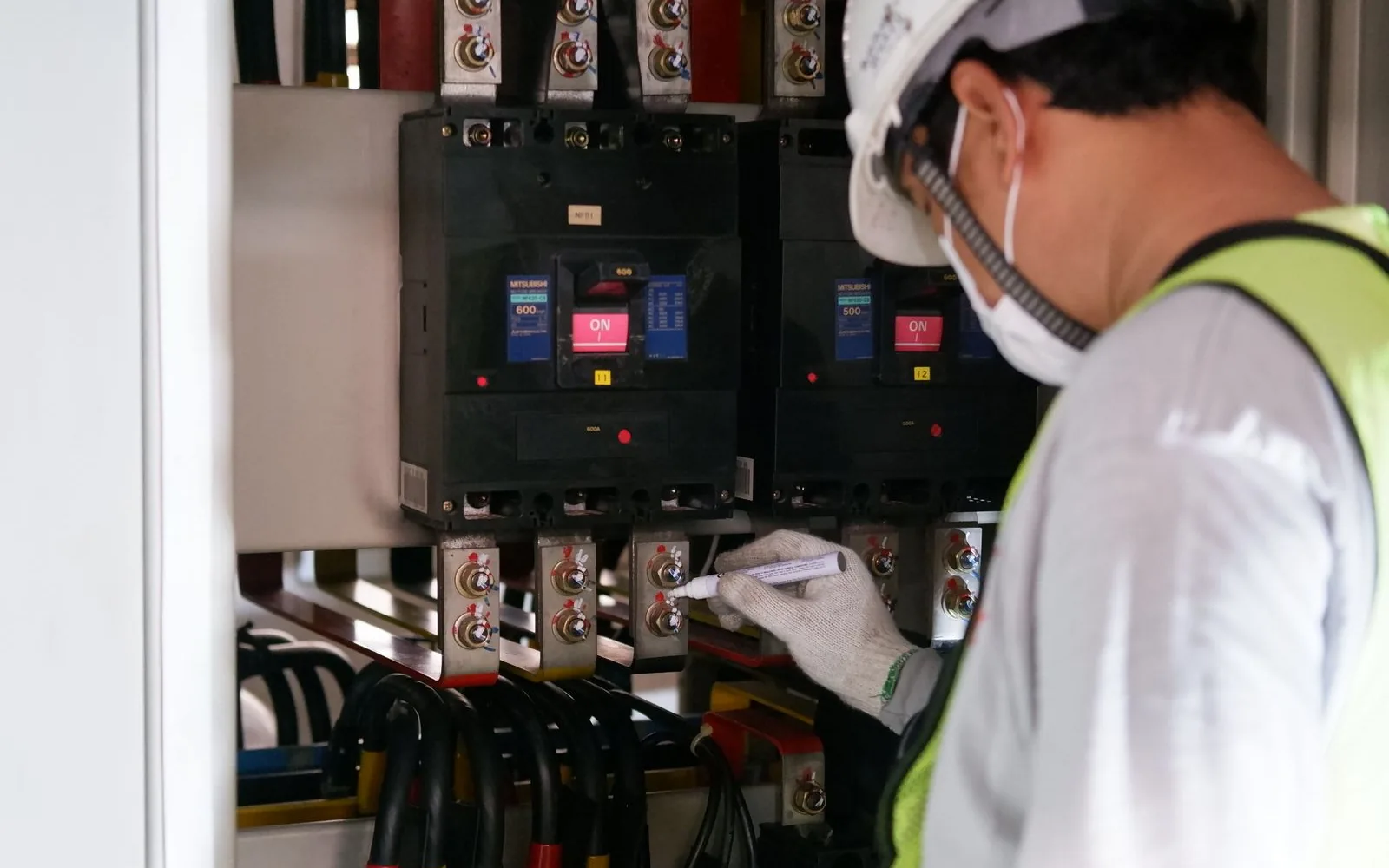
Sound like your week?
These are operations problems, and a pile of disconnected apps makes every one of them worse.
A whiteboard in the office, a group text with the crew, and whatever the customer was told on the phone. Change one and the other two are already wrong.
Panel shots, meter readings, before and after, the signed sign-off. All of it sitting in somebody's camera roll until they remember to send it.
Because the paperwork has to come back to the office, get read, get typed in, and get checked before a single dollar can be billed.
Materials came off three different trucks, hours were written on the back of a work order, and the real margin on that job is a guess.
What we build for you.
Shaped around how the work already happens, so nobody retypes what somebody else already entered.
One schedule everyone sees
Jobs, crews and trucks on a single board. Move a job and the crew's phone updates, the customer gets told, and the office does not have to make three calls to find out where anybody is.
Work orders that survive a cold truck
Built for a phone in a cold truck with gloves on. Big targets, few taps, and it keeps working with no signal, then syncs the moment the bars come back.
Photos and signatures captured on site
Attached to the job the second they are taken. Proof of work is filed before the crew has packed up, and it is still there when a question comes back a year later.
Parts tracked off the truck
Materials get pulled against the job as they are used, so your stock counts are real, the reorder is not a guess, and nothing gets installed for free.
Quote to invoice without re-typing
The estimate becomes the work order and the work order becomes the invoice. The numbers get entered once, by the person closest to the work.
Where the money went on every job
Labour, materials and travel all land against the job. You can see which work is worth taking and which work has been losing you money for years.
We built exactly this for an electrical contractor in western Maine. It runs their crews today, and they own every part of it.
What changes.
You own it.
You do not rent it.
- No per-seat licence, on any number of crew
- Your customer list and job history on hardware you control
- Documented well enough to hand to somebody else
The system we build for you is yours. Your customer list, your job history and your pricing sit on infrastructure you control, and the whole thing is documented well enough that you could hand it to somebody else tomorrow.
After the build we keep it running as part of your managed IT, along with your computers, accounts, backups and help desk. We would rather profit from your growth than from your dependence on us.